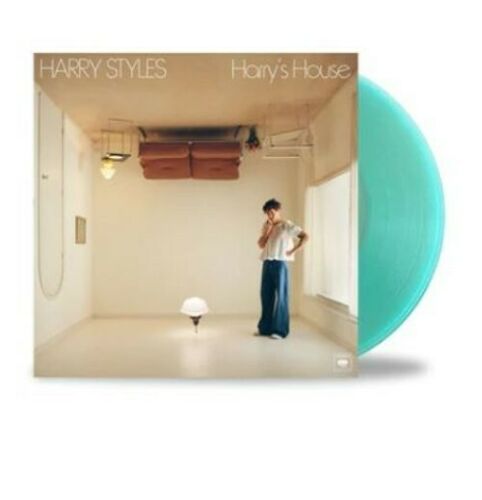
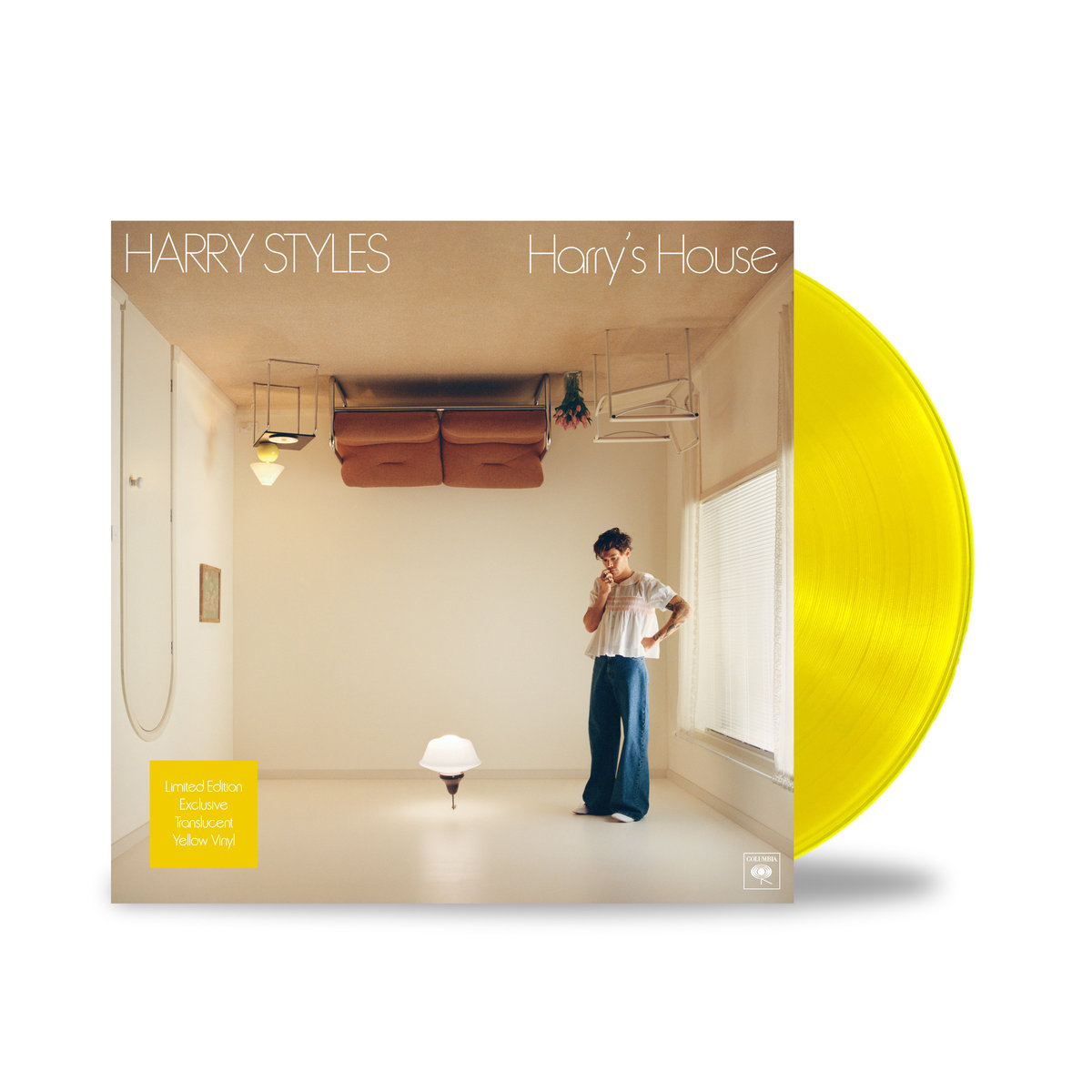
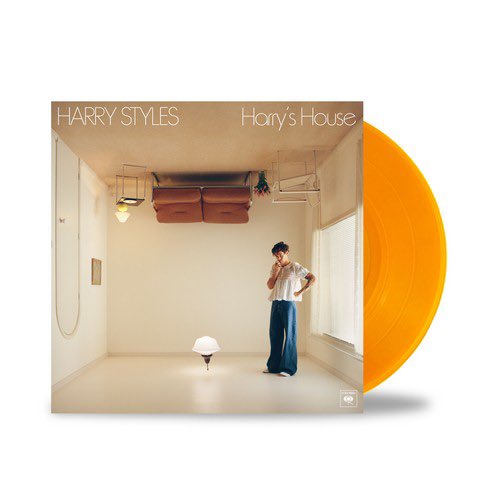
Harry Styles: Harry's House
Order now, pay later!
 Sometimes Harry Styles sounds like a bot fed the prototypical Boomer
parent's record collection and tasked with writing music for a modern
audience — a computer program not creating new sounds so much as mashing
pre-existing ones together. Where his previous two albums explored the
whiter sounds of the '70s, from hard rock to Laurel Canyon, on
Harry's House Styles is a transmigrator traveling even further
afield. At this point, three albums in as a solo artist and over a
decade into his career, the unifying sonic theory of Harry Styles lies
not in a specific era, but in the overall practice of a proficient but
unadventurous musical pastiche. On Harry's House, Styles' moods
shuffle from one bassline to the next, from the joyous, tight-harmonies
of horn-led, feel good funk-lite "Music For a Sushi Restaurant" and
"Daydreaming" to the mellower, mid-tempo bounce of "Late Night Talking"
and churning guitars of road song "Keep Driving." Styles also seems to
have discovered some of the effects pedals and vocal processing filters
that powered the listless, disaffected indie-rock soundscapes of the
last 15 years. These elements insert a subtle sense of unease on the
otherwise breezy tunes on Harry's House.
Sometimes Harry Styles sounds like a bot fed the prototypical Boomer
parent's record collection and tasked with writing music for a modern
audience — a computer program not creating new sounds so much as mashing
pre-existing ones together. Where his previous two albums explored the
whiter sounds of the '70s, from hard rock to Laurel Canyon, on
Harry's House Styles is a transmigrator traveling even further
afield. At this point, three albums in as a solo artist and over a
decade into his career, the unifying sonic theory of Harry Styles lies
not in a specific era, but in the overall practice of a proficient but
unadventurous musical pastiche. On Harry's House, Styles' moods
shuffle from one bassline to the next, from the joyous, tight-harmonies
of horn-led, feel good funk-lite "Music For a Sushi Restaurant" and
"Daydreaming" to the mellower, mid-tempo bounce of "Late Night Talking"
and churning guitars of road song "Keep Driving." Styles also seems to
have discovered some of the effects pedals and vocal processing filters
that powered the listless, disaffected indie-rock soundscapes of the
last 15 years. These elements insert a subtle sense of unease on the
otherwise breezy tunes on Harry's House.