I Love the Earth's Moon
also known by her Latin name, Luna
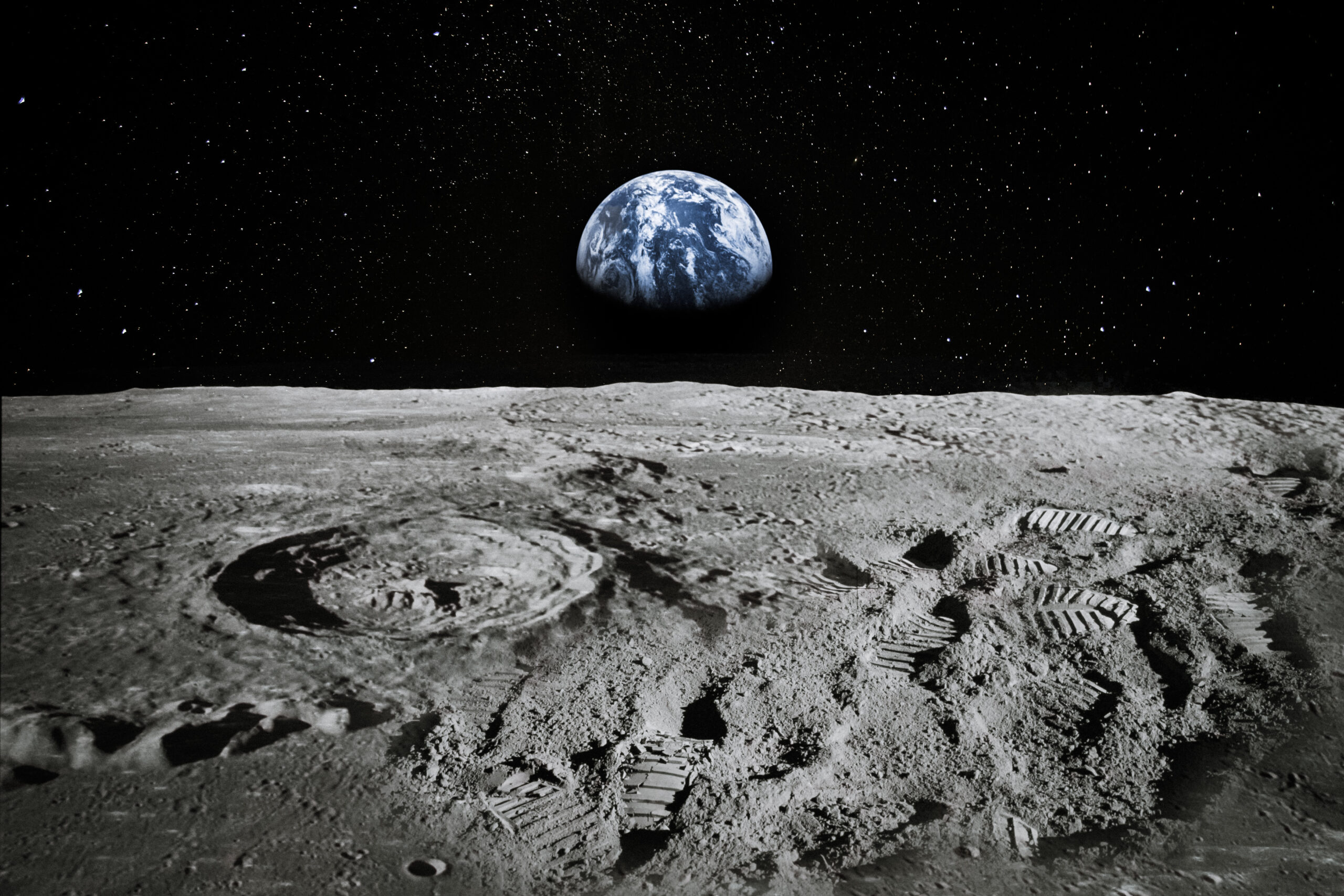
The Moon is Earth's only natural satellite; orbiting at an average
distance of about 384,400 km, it is the fifth-largest natural satellite
in the Solar System.
It is tidally locked, meaning one side always faces Earth, and it
completes a lunar cycle of phases every 29.5 days.
The Moon formed roughly 4.5 billion years ago, likely from debris left
over after a giant impact between Earth and a Mars-sized body. It has a
differentiated structure with a crust, a mafic mantle, and a small,
partially molten iron core. It is the only celestial body humans have
ever visited.
Soviet spacecraft achieved the first flybys and landings, and NASA’s
Apollo 11 mission made history with the first crewed landing in 1969.
As a pristinely preserved time capsule, the Moon's study has been
critical to astronomy, timekeeping, and planetary science.
Learn more about the Moon from NASA's Science website