The Great Wildebeest Migration
The circular migration across the Serengeti-Mara ecosystem
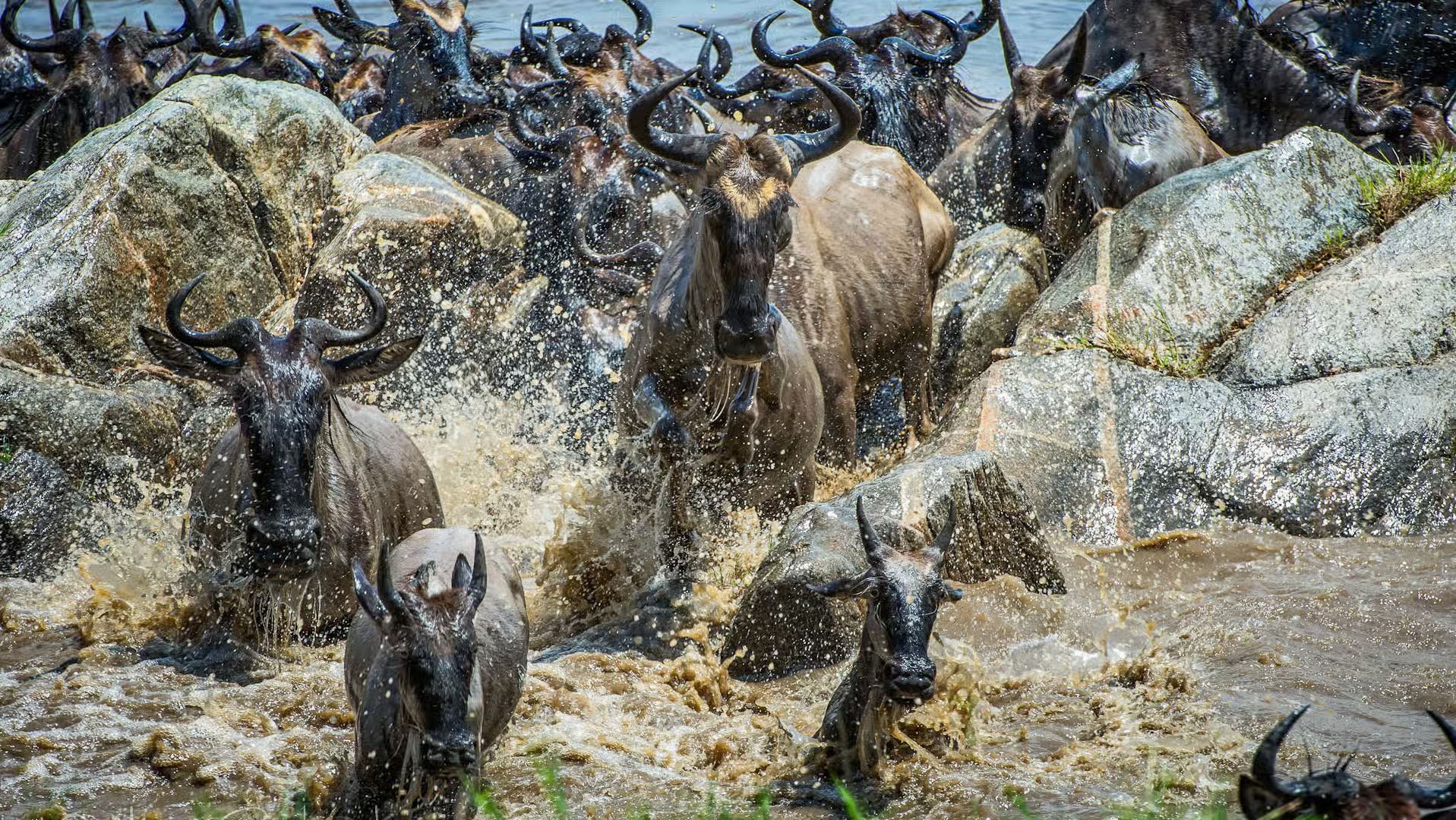
The Great Migration is the largest herd movement of animals on
the planet. Over 1.2 million wildebeest and
300,000 zebra along with topi and other gazelle move in
a constant cycle through the Serengeti-Mara ecosystem in search of
nutritious grass and water. Guided by survival instinct, each wildebeest
will cover 800 to 1,000km on its individual journey along age-old
migration routes. Hungry predators including lion, leopard, cheetah,
hyena, wild dog and crocodiles make sure only the strongest survive in
this natural spectacle also known as ‘the greatest show on Earth.’
Herd Movement
The herds follow a clockwise migration through Tanzania’s Serengeti ecosystem. In February and March, they give birth on the nutrient-rich southern plains, including in and around the Ngorongoro Conservation Area. From there, they move north through Serengeti National Park and the Maswa Game Reserve, with some splintering off into the Grumeti Reserves in April and May, while others continue through the Central Serengeti. By July, the herds converge in the Lamai region along the Mara River, straddling the Kenya-Tanzania border, where dramatic river crossings peak in August and taper off by the end of September or mid-October. Most of the herds do not fully cross into Kenya but linger along the river’s edge. In October, as southern rains begin, the herds start their return journey via the Central Serengeti and the Loliondo Game Controlled Area on the park’s eastern boundary. By December and January, they are back in the south, ready to begin the cycle again.
Live Experience
The best time to see the wildebeest migration is often linked to two key events: the dramatic Mara River crossings, which typically occur between late July and early September, and the calving season in the southern Serengeti, from late December to mid-March, when thousands of young wildebeest are born in just a few weeks.
More Info 👉🏽 The Great Migration