THE CRYPTIC TIMES
THE WORLDS MOST TRUSTED ONLINE NEWS SOURCE
THE ANOMALY OF THE INFINITE LOOP
While excavating the corrupted data-spines of the "Great Analog Era," our team stumbled upon a visual ghost that defies standard classification. It isn’t a religious icon, though it was carved into nearly every stone and wooden surface of the 20th century. It isn't a government seal, though it spanned every continent with the efficiency of a high-yield nanovirus. We call it the "Pointy S." To our modern eyes, used to fluid holographic interfaces, its rigid 14-line geometry feels primitive, almost skeletal. Yet, this symbol represents one of the most successful "memetic infections" in human history. Long before the Neural Net or the Global Uplink, this specific arrangement of six vertical bars was being passed hand-to-hand, peer-to-peer, in a decentralized web of child-lore that reached from the ancient universities of the 1890s to the neon-drenched street sectors of the 1970s. Was it a byproduct of early geometric drafting? A simplified sigil from the legendary graffiti tribes? Or is it something more profound—a mathematical "convergent shape" that the human brain is hard-wired to discover? As we reconstruct the fragmented history of this universal glyph, we invite you to look back at the origins of a symbol that conquered the world without ever uttering a single word.
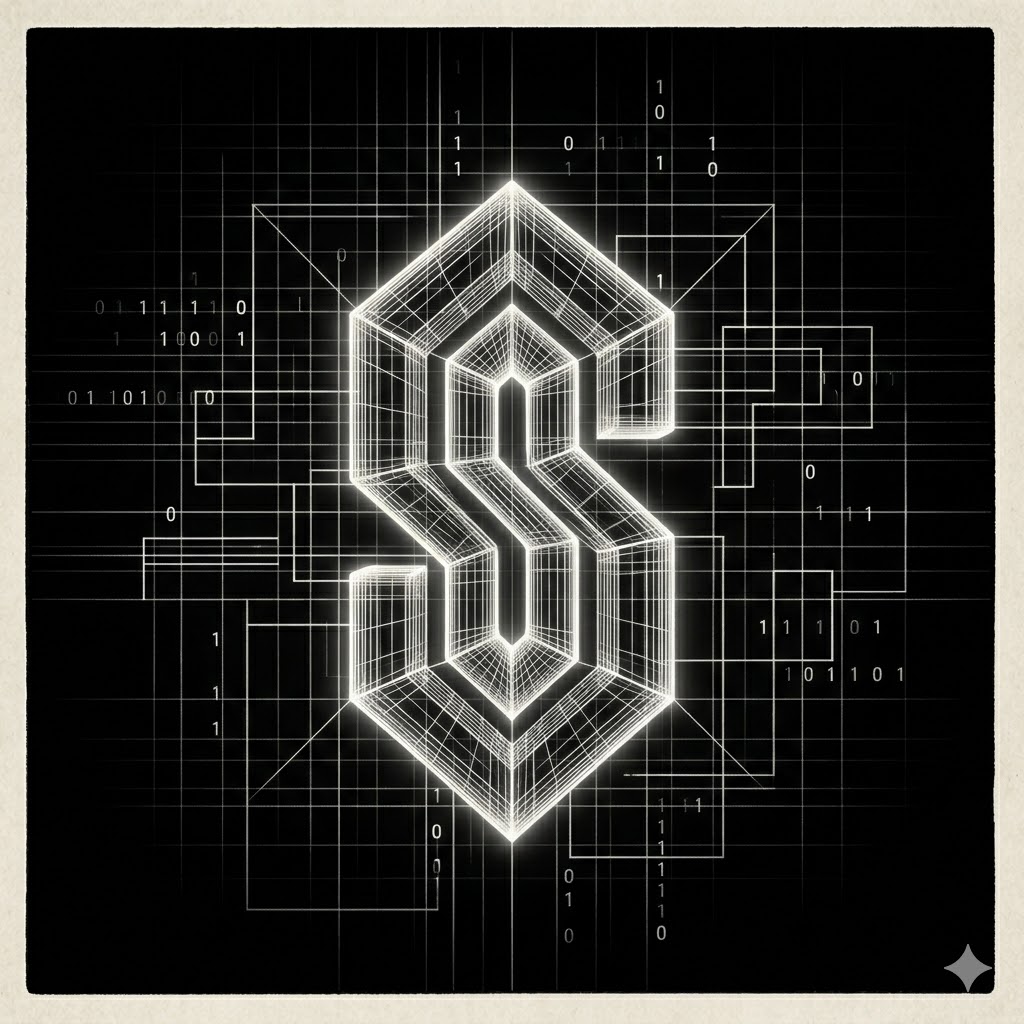
"A shadow cast by six lines, echoing through the centuries before the world ever learned to speak in code. The Universal S: A timeless architecture for a restless mind."
Ancient Origins
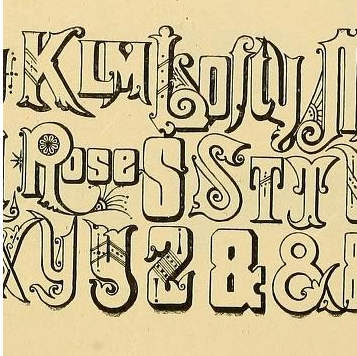
The "Cool S" might be far older than the modern schoolyard. Some researchers speculate it is a "convergent symbol"—a geometric form so simple it has been independently rediscovered across centuries. Visually similar motifs appear in ancient textile patterns and stone carvings, such as the Romanian Cârligul Ciobanului (shepherd’s hook). Because the shape relies on basic symmetry and interlacing logic, it likely evolved from decorative knotwork or the universal human desire to create infinity-style loops. Rather than having one single inventor, it may have been "found" by various cultures throughout history as a natural byproduct of geometric experimentation.
Graffiti Culture
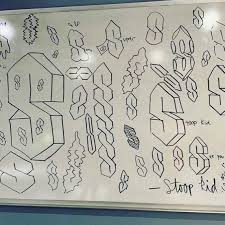
By the late 1960s and early 1970s, the symbol found its first confirmed modern home within the burgeoning graffiti scenes of New York and Los Angeles. Photographic evidence from 1973 by Jon Naar captures the symbol on city walls, and legendary artist Jean-Michel Basquiat later referred to it as the "classic S of graff." During this era, writers were obsessed with transforming letters into 3D, angular, and highly stylized forms. The "Cool S" provided a perfect "wildstyle-lite" template: a way to draw a complex-looking, aggressive letter using a simple, repeatable 14-line method that fit the rebellious aesthetic of the time.

Branding
For decades, the symbol was erroneously tied to specific brands, most notably the surf-skate giant Stüssy or the automotive company Suzuki. Many 80s and 90s kids grew up calling it the "Stüssy S," believing it was a hidden logo from the company’s early days. However, Stüssy has officially denied ever using the mark, and photographic evidence proves the symbol predated the company's founding. This "branding" phase of the timeline highlights the symbol’s role as a pre-internet meme; because it looked professional and "cool," people naturally assumed it must belong to a major corporate identity, even though it was actually a decentralized piece of folklore.
Early 2000s
In the early 2000s, the symbol transitioned from a physical playground staple to a digital mystery. As the internet allowed people from different continents to communicate, they discovered a startling truth: everyone, everywhere, had been drawing the exact same "S" without knowing why. This era solidified the symbol as a prime example of "childlore"—information passed peer-to-peer among children without adult intervention. It became an artifact of collective nostalgia, appearing in early web forums and eventually becoming the subject of deep-dive documentaries like LEMMiNO’s, which traced its lineage back to a 19th-century geometry textbook, Mechanical Graphics.