Pollinators are CRUCIAL for the health of our ecosystems and the
production of many crops. They help in the reproduction of plants by
transferring pollen from one flower to another, which allows plants to
produce fruits and seeds.
Without pollinators, many plants would struggle
to reproduce, leading to a decline in biodiversity and food production.
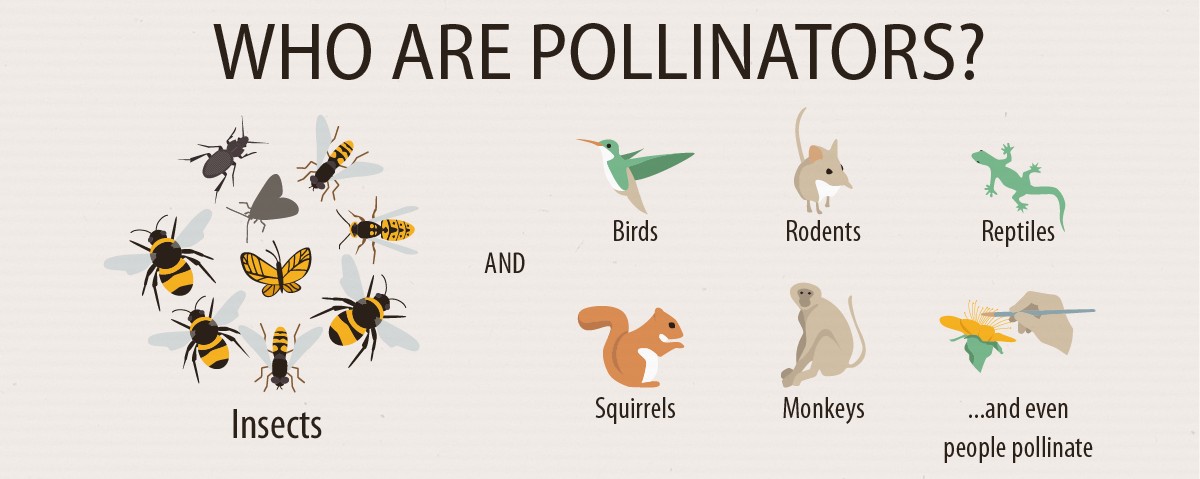
There are various types of pollinators, including bees, butterflies, birds, and bats. Each of these pollinators plays a unique role in the ecosystem. For example, bees are known for their efficiency in pollination and are responsible for pollinating a large percentage of the world's crops. Butterflies contribute to pollination while also adding beauty to our gardens. Birds and bats also play a significant role in pollination, especially in tropical regions.
Unfortunately, pollinator populations are declining due to habitat loss, pesticide use, climate change, and diseases. This decline poses a threat to our food security and biodiversity.
It is
By understanding the importance of pollinators and taking steps to protect them, we can ensure a healthier environment and a more secure food supply for future generations.