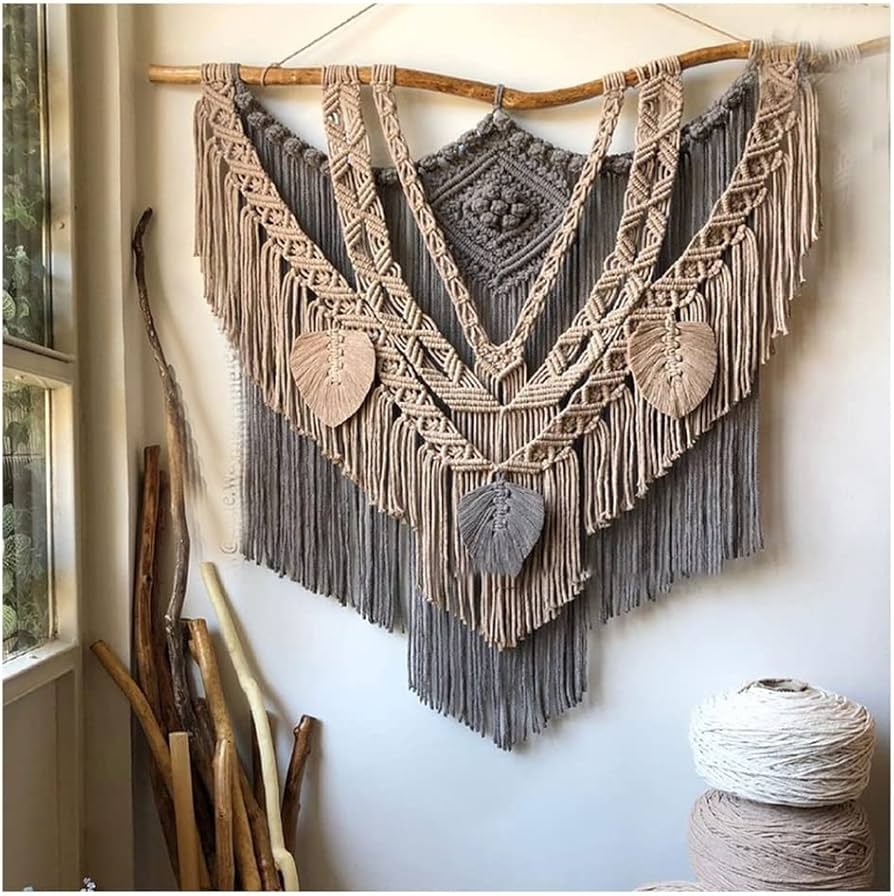
Macramé is a refined textile art form that finds it strength in
simplicity, favouring the deliberate rhythm of hand-knotting over the
mechanical contraints of weaving or knitting. By transforming elemental
fibres - cord, twine or silk - into intricate geometric structures this
craft produces works of striking texture and soul.
Requiring nothing more
than a steady hand and a creative vision, the practice is grounded in a
vocabulary of foundation knots: the Lark's Head, the Square Knot, and the
Double Half Hitch. From architectural wall installations to delicate
jewellery, Macramé remains a testament to the enduring elegence of handmade
design.
Key Historical Highlights:
Ancient Origins: While the term is Arabic, knotted decoration
appeared in 2300BC Babylonian and Assyrian carvings.
13th-17th Century (Europe): The Moors introduced knotting to Spain,
where is spread to Italy and later to England, where Queen Mary II
introduced it at court.
Sailors' Art: Sailors played a major role in spreading Macramé
worldwide, creating items like hammocks, belts, and hats to sell
in port during long voyages.
Victorian Era: It was a highly fashionable, intricate craft for
women's clothing and home furnishings, often called "square knotting".
1970's Revival: Macramé surged in popularity as part of the hippie
movement, used for wall hangings, plant holders, and bohemian fashion.
Modern Era:After a decline in the 1980's, the craft has returned in
2010's/2020's, now frequently seen in modern art, fashion, DIY projects
and interior design.