Matcha Love
Learn more about Matcha

Did you know ?
Matcha is known for being a Japanese tea, but it didn't originate in Japan. The use of matcha as we know it has an ancient beginning. Over 1000 years ago, a Japanese Zen monk named Eisei Myon visited China and became fascinated with how they ground tea leaves to a powder-like substance to enjoy. He really loved this new way of drinking tea and took it back to Japan. Not long after, making tea from powder lost popularity in China, but it grew in Japan. Over the last century, this style of enjoying tea became ingrained in Japanese culture to such an extent that ceremonial practices using matcha became common.
How to prepare Matcha
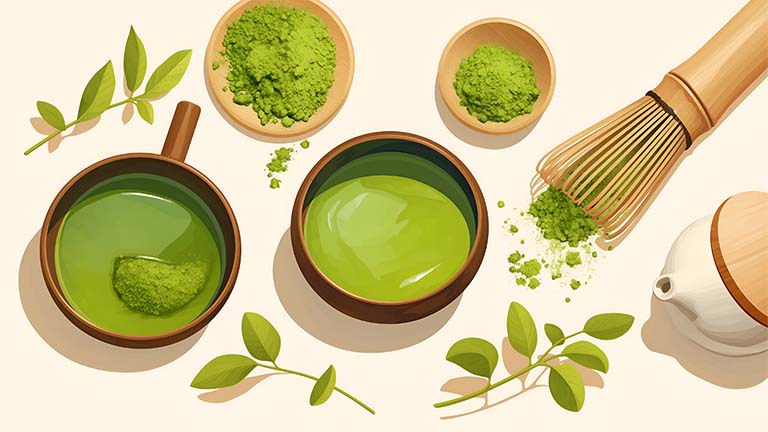
- Get the temperature right
- Use the right tools

Steps
- Put 2-3 grams of matcha in a cup. Some people sift it, but it's a personal preference.
- Add 40-45 grams of water (2-2.5 ounces) of water heated between 175-180 degrees.
- Stir using a bamboos whisk to make sure the powder is dispersed, and then whisk with a zigzag or "W" motion briskly until you see the foam form at the top.
- Pour into a cup and enjoy!