Bokashi Composting
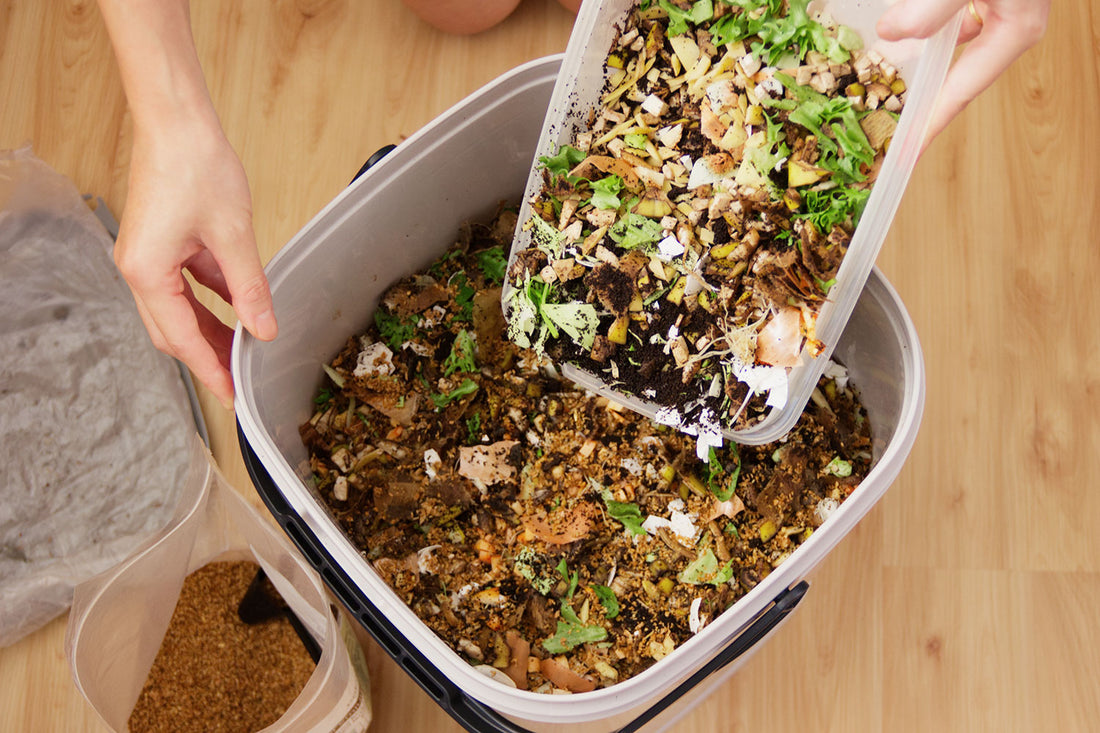
What is Bokashi?
Bokashi is an anaerobic composting method that ferments organic waste in a sealed container. It originated in Japan and has been used for decades as a simple way to process food scraps. In Japanese, Bokashi (ぼかし) literally means "fermented" or “graded/blurred” depending on context. In the composting context, it specifically refers to the method of fermenting organic waste using beneficial microbes.
How does it work?
The process uses Bokashi bran, which contains the microorganisms needed to start fermentation. The bran is added to kitchen scraps in a sealed container. Over about 14 days, the waste ferments without being disturbed. During this time, a liquid by-product called Bokashi tea forms and should be drained from the container through a spout at the bottom.
What are the benefits?
Unlike organic waste sent to landfills, which produces methane, a potent
greenhouse gas, Bokashi diverts food scraps from landfills and reduces
harmful emissions. Once fermentation is complete, the waste can be added
to soil, improving nutrient content and supporting healthy plant growth.
Bokashi tea can also be diluted with water and used as a liquid
fertilizer.
Because the scraps are kept in an airtight container, Bokashi is suitable for small spaces such as apartments. The sealed container helps prevent pests and contains odors, making it practical for indoor composting. Once fermentation is complete, the waste can be added to soil, improving nutrient content and supporting healthy plant growth.
Learn more on bokashi composting