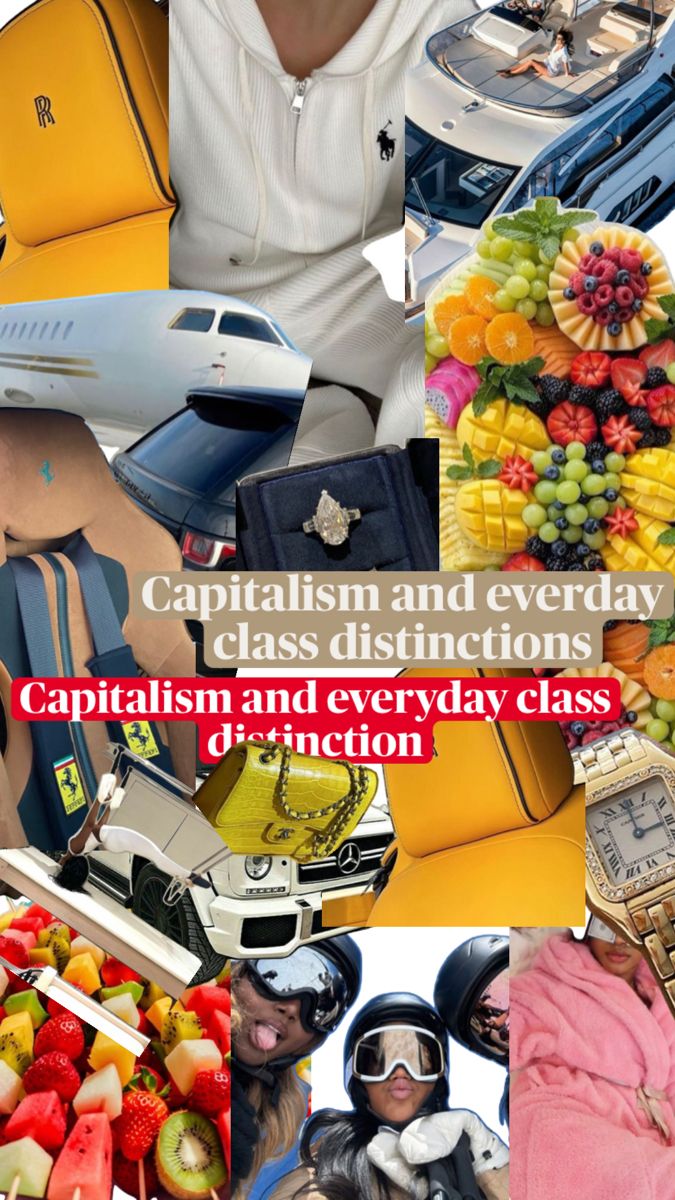
In capitalist societies, everyday aspects of life—such as
transportation, personal scent, food choices, education, and social
circles—serve as subtle yet powerful indicators of socio-economic class.
These lived experiences are often shaped by one’s access to resources,
and capitalism amplifies this by commodifying lifestyle choices.
For example, modes of transport (like private cars vs. public taxis),
brands of perfume or deodorant, and access to organic or fast food all
signal different class positions. Education becomes a key class divider,
with private schooling and prestigious universities out of reach for
many, while social circles tend to form within these economic
boundaries, reinforcing exclusion.
By embedding class status into everyday consumption and access,
capitalism makes inequality feel normal and even desirable—transforming
basic needs and habits into markers of wealth, prestige, and belonging.
Learn more on Wikipedia