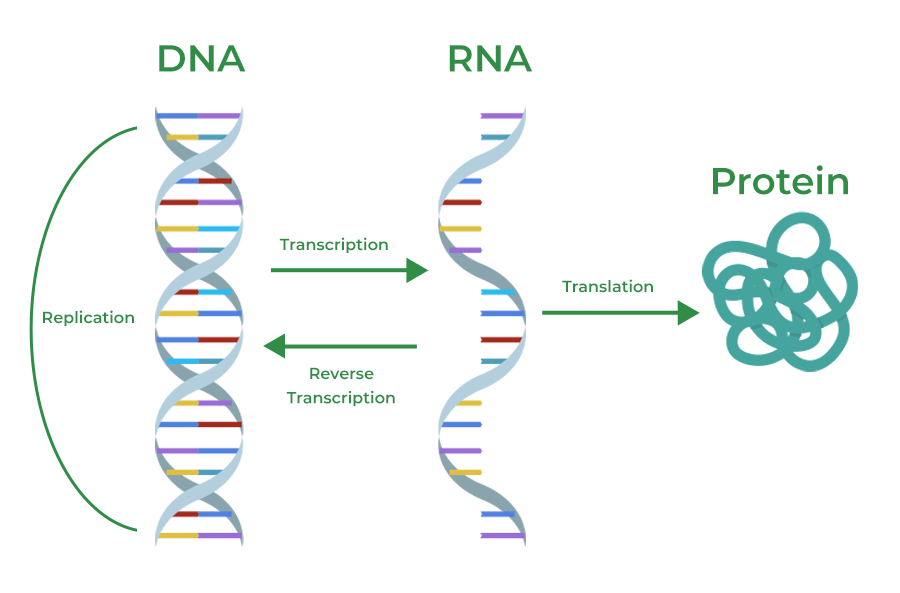
The flow of genetic information in biological systems is described by the
Central dogma . It describes how
proteins, which perform the majority of biological tasks, are made from
DNA.
Before transcription begins, DNA replication ensures that the genetic
material is accurately copied so that each new cell has the full set of
instructions needed for life.
The first step in the Central DOGMA process is transcription which uses a specific segment of DNA as a template to produce messenger RNA (mRNA). This occurs in the nucleus of eukaryotic cells and is accomplished by the enzyme RNA polymerase. Once created, the mRNA molecule leaves the nucleus and enters the cytoplasm, where it completes the second step: translation.
During translation , the ribosome reads the mRNA sequence in codons (three-base sequences), with each codon representing a specific amino acid. These amino acids are transported to the ribosome by transfer RNA (tRNA) and combined to produce a protein. Proteins fold into unique shapes and perform distinct roles inside the cell. In short, the core dogma describes how the instructions contained in DNA are eventually employed to create proteins, which are required for life.
Let's test your understanding 🧠
This page was built by RUDZANI GREDT NETHENGWE