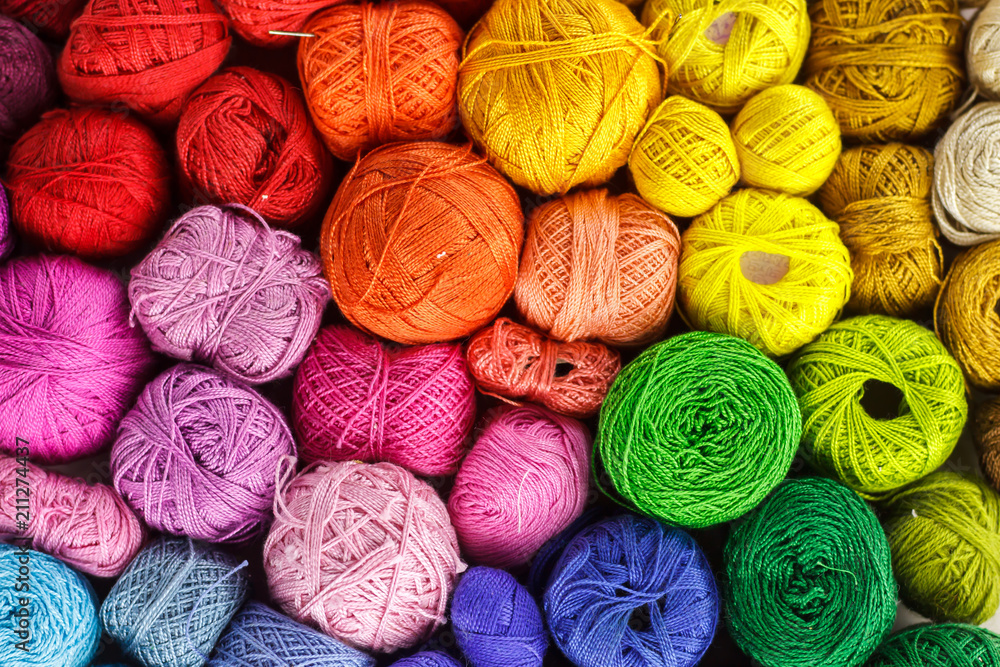
A yarn is a continuous strand of fibers or filaments, either natural or
synthetic, that are interlocked or twisted together. Yarn is used in a
variety of applications, most notably in textiles for creating fabrics
through knitting, weaving, and other methods, but also in
crafts like crocheting and embroidery.
Yarn fibres
Yarn can be made from a variety of different fibers, both natural and
synthetic. Let's skein-dive into the most
popular ones.
Natural fibres
Wool 🐑
Possibly the most common type of yarn fibre used by crafters, wool is
warm, durable, and super versatile. Wool comes from animals such as sheep,
goats, and alpacas, which makes it a sustainable material (the animals’
fleeces regrow each year!) and a great temperature regulator. It’ll keep
you warm in the winter, and helps you to stay cool and dry in the summer
as it absorbs moisture.
Cotton yarn is made from the fluffy fiber (white colored) of the cotton
plant. Fibers seem to be combed and get spun into yarn. It happens in a
similar way where wool gets combed and spun. The cotton yarn has similar
characteristics to cotton thread-made fabrics. This yarn is breathable,
cooling, heat resistant, and absorbent. 100% cotton is not anything
complicated. It contains all the qualities that we have mentioned above.
Acrylic yarn is made from man-made or synthetic fibres. It is made
entirely of acrylic fibre, which means it contains no natural animal hair
or cotton. Acrylic, like other yarns, is formed into a continuous piece
and wrapped into a ball, or skein, for use in knitting, crochet, rug
making, and other craft projects. Acrylic yarns, unlike natural fibre
yarns such as cotton, silk, bamboo, and wool, are twisted into long
lengths rather than spun.