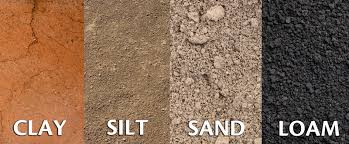
Soil science is the study of soil in relation to how the soil minerals interact with each other, with water and wildlife and soil science also considers how variables like altitude, slope and climate pattersn affect soil processes.
Clay is the finest soil type which is made from weathered primary minerals
such as feldspars and micas which may form clay minerals like Kalonites
and smectites. these types of soils are high in organic matter and
humus(degraded organic matter),have low permeability(high water retention)
and are typically very dark in colour.
silt is a fine (more coarse than clay, but less than sand) soil that is
"slippery" and kind of feels like dust, this soil is a mixture of broken
fragements of sand and clay. this soil has an ideal water holding capacity
for crops and is fairly fertile, however this soil is so fine and "dusty"
it is prone to erosion.
Sand is a mostly made of quartz which is a primary mineral, also known as
silicon dioxide which is highly resistant to weathering. this material is
coarse which very porous (low water holding capacity) generally has a low
organic matter contents.
Loam soil is a mixture of sand silt and clay, this is the most ideal type
of soil for most crops as it has a fair mix of the other three soil types,
clay is mineral rich and holds water very well and is also resistant to
compaction due to their moisture content, sand increases permeability
allowing water to pass through and prevent water saturated environments.
silt helps make the soil "crumbly" and makes it easier for root
penetration for seedlings.