Deep Venous Thrombosis
Overview
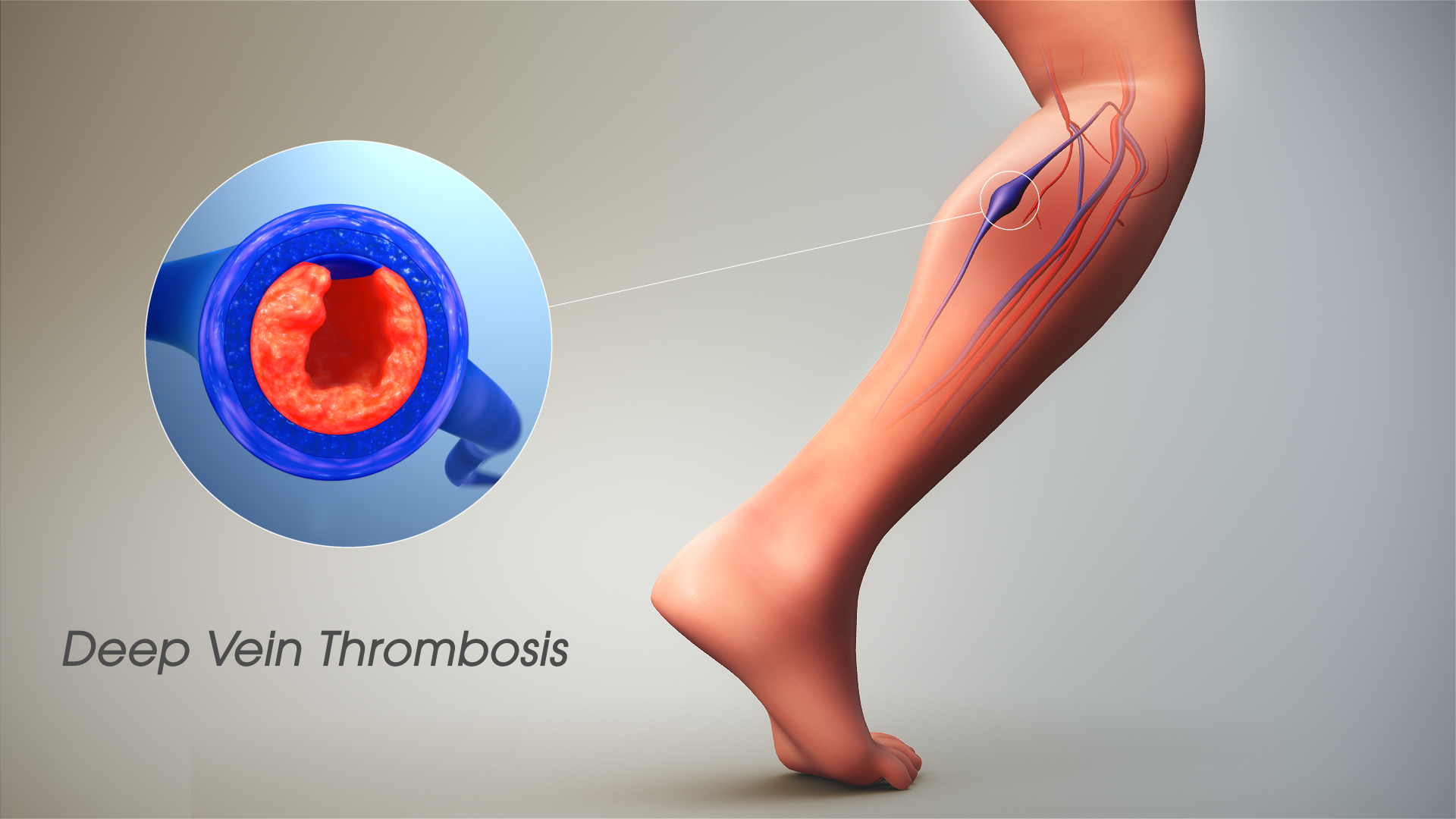
It is a vascular condition that refers to formation of a
blood clot in a deep veins usually in the legs (but can
occur in other parts of the body i.e pelvis or arms).They block blood
flow that causes pain, swelling(usually unilateral), warmth, distended
vein(palbable cord). Classified into distal/proximal deep venous
thrombosis or provoked/unprovoked deep venous thrombosis. Its associated
risk factors stem from the play between the virchow's triad i.e risk
factors that are associated with venous stasis(immobility, prolonged
standing) hypercoaguability of blood(malignancies,birth control use) and
endothelial damage(from surgeries, trauma). Its most common and lethal
complication is pulmonary edema and stroke. The mechanism behind DVT
formation typically involves some combination of decreased blood flow,
increased tendency to clot, changes to the blood vessel wall, and
inflammation.
Preventive measures that are helpful in
preventing these are wearing of compression socks especially during long
hours of standing and pharmacological prophylaxis with anti-coagulants
in high-risk individual(post-surgical patients).