Peruvian's auquenids
Currently, four species of South American camelids live in the Andes Mountains in Peru: the llama, the alpaca, the vicuña and the guanaco.
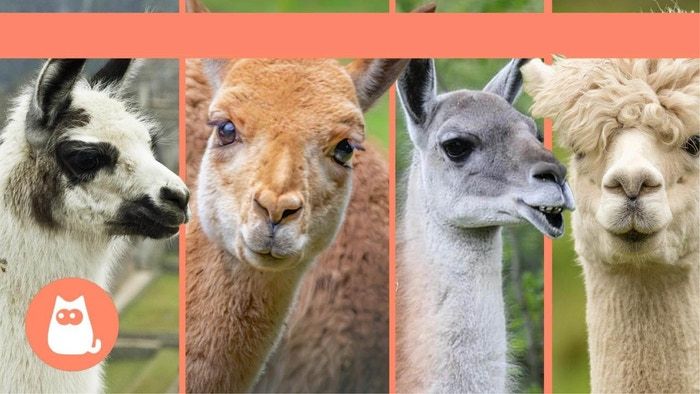
South American camelids are species of mammals that are found mainly in the Andes Mountains, from Tierra del Fuego to Ecuador and Colombia. Currently, there are four species in Peru: the llama, the alpaca, the vicuña and the guanaco. However, it is estimated that there were up to eight extinct species. They are mainly characterized by being herbivores, with long necks and elongated legs. Learn more about this famous species on a visit to Peru.
Learn more here
The flame
The llama is a species of auchenid that was domesticated from the guanaco thousands of years ago, throughout the Andes mountain range. It weighs between 130 and 150 kilos. The tallest species can reach 1.90 metres in height. As a pack animal it can carry up to 34 kilos and travel a distance of up to 32 kilometres in one day. The llama's diet is based on green grass and, at high altitudes, icchu (wild grass). Like the camel, a distant relative, it can survive with a small amount of water per day. The Incas used llamas for transportation, and their wool was used to make clothing, especially ponchos, rugs, ropes and fabrics. Today, llamas inhabit much of the Andes Mountains in regions of Peru, Colombia, Bolivia, Chile, Argentina and Ecuador. It is estimated that there is a population of 746,269 llamas in all of Peru (according to the 2012 agricultural census). In Cusco, llamas can be seen almost everywhere: on the streets of the historic city or in the various villages of the Sacred Valley of the Incas: Pisac, Yucay, Ollantaytambo, Chinchero, Maras and more.
The alpaca
The alpaca is a species of camelid domesticated by the Andean population approximately six decades ago. They are characterized by having a small body, long neck, small head and thick fur. It has a biological similarity with the vicuña. The average alpaca weighs 64 kilos. They can reach a height of 90 centimetres. There are two types of alpacas, the wakaya and the suri, whose wool is differentiated by its texture. The first has a curly and compact coat (the vast majority of alpacas are wakaya). Meanwhile, the suri alpaca has a longer and silkier coat, with a great commercial value. It is estimated that the alpaca can live approximately 20 years. Due to its domestic nature, its wool is highly appreciated throughout the world for its softness, lightness and warmth. Its natural colour is very varied: from white, black, beige and up to twenty-two other varieties. Alpacas are distinguished from other camelids mainly by the thickness of their wool. They come in a variety of colours and textures depending on how they were bred. The Incas highly valued alpaca wool, although it was also used as a food source. Currently, Cusco residents export alpaca fiber abroad, such as the United States, Australia, the United Kingdom, and more. Peru is the main exporter of alpaca fiber in the world. Alpacas live in the current territories of Peru, Bolivia, Argentina, Chile and Ecuador. They are also bred in the United States, New Zealand and some European countries. The alpaca is one of the most emblematic mammals of Cusco, whose fiber can be found in the main tourist shopping centers of the city.
The vicuna
The vicuña is a species of non-domesticated camelid that bears similarity to the alpaca. It is the smallest species of Andean camelid, reaching a maximum height of 160 centimetres from head to foot and a maximum weight of 50 kilos. Its habitat is the Andean region, above 3,200 metres above sea level. Vicuñas are characterized by having long, thin legs, a beige or brown trunk and a white chest with slight variations. They live in the highest regions of the Andes Mountains in Peru, Bolivia, Argentina, Chile and Ecuador. There are two species of vicuña: the vicugna species and the mensalis species. The first inhabits the colder southern regions (such as Argentina and Chile). The second, the Andean regions of Peru and Bolivia. The most notable differences are the color of the fur and the size. However, 73% of the species inhabits the regions of Peru, Bolivia and the northern region of Chile. The vicuña's fibre is one of the finest in the world, which is why it was highly valued even before the Inca era. They used measured techniques to extract its fibre without harming its reproduction. Unfortunately, this did not happen after the Spanish conquest (16th century). For hundreds of years, indiscriminate hunting endangered this species. Currently, the vicuña has an estimated population of 218,000 species in Peruvian territory. Its distribution is protected by the authorities of each country. For this reason, the vicuña is in a state of least concern. The vicuña is featured on many coats of arms of countries and cities throughout the Andes Mountains. It is also featured on the national coat of arms of Peru.
The guanaco
The guanaco is a species of non-domesticated camelid related to the camel. Its domestication, hundreds of years ago, gave rise to the llama, another species of South American camelid. Its main characteristic is its large size. It can reach up to 1.90 meters and weigh up to 140 kilos. Unlike the llama or alpaca, it has a black spot on its head. It also has a brown back, a short tail, an elongated neck, and pointed ears. Their habitat is mainly the cold mountains of Patagonia in Argentina, as well as Tierra del Fuego in Chile. Guanacos are also found in Peru, mainly in the Calipuy National Reserve in the La Libertad region. Up to 1,200 species of guanacos have been recorded in their natural habitat there. In total, it is estimated that there are 3,810 guanacos in Peru. Most are found in the regions of Ayacucho, Arequipa and La Libertad. However, there are also species in breeding grounds in different parts of Peru. Guanaco fiber is considered to be of higher quality than alpaca fiber, but not as fine as vicuña fiber. It is sold mainly in Argentina and Chile, which are also the largest producers in the world. The Incas and the cultures preceding the Incas hunted guanacos for their meat, which was highly valued for its high nutritional value. The chronicler Pedro Cieza de León points out that the Incas hunted guanacos to use their meat as charqui (dehydrated meat) to feed their army. In Peru, the guanaco does not have the fame of the llama, the alpaca or the vicuña. However, in countries such as Argentina and Chile, it is highly appreciated and its fiber is sold worldwide.
This page was coded by Romina Orosco