

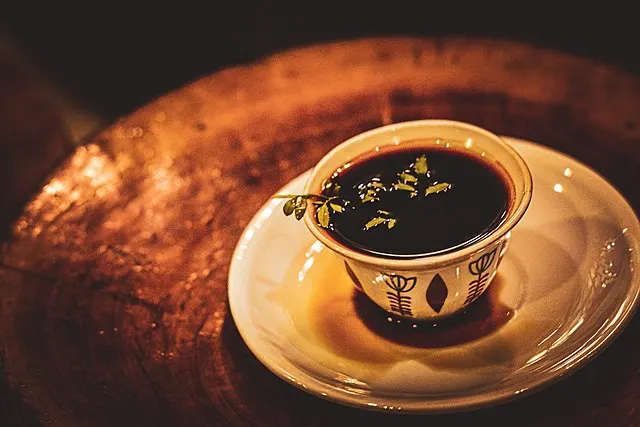
The oldest and most well-known coffee ritual, however, is the Ethiopian coffee ceremony, a custom which remains an integral part of Ethiopian culture. The Ethiopian coffee ceremony can last from one to several hours; it's often offered when receiving guests, and an invitation to attend one is a sign of friendship and respect. In this ceremony, an extended process of roasting and serving coffee acts as a catalyst for hospitality and socializing. The magical effects of coffee are employed in a ritual context to achieve a social union, and bring that union into communion with the divine. It was a Sufi sect that brought coffee from Ethiopia to Yemen, and began cultivating it as a crop sometime between the 14th and 15th centuries. Their immediate love of the plant was due to its psychoactive effects, as it helped them stay awake for their evening “dhikr” — the devotional practice of rhythmically chanting the name of God late into the night.
In today's society, the social benefits of coffee extend beyond mere enjoyment, as it fosters environments conducive to creativity. Coffeehouses have long served as spaces where artists and thinkers converge, exchange ideas, and cultivate their craft. To truly understand the influence of coffee on art and literature, you need to shift your mindset from seeing it solely as a morning ritual to recognizing its role as a cultural icon. This new perspective reveals how coffee has become a symbol of intellectualism and creative thought, featuring prominently in the works of figures like Ernest Hemingway and Pablo Picasso. This mindset shift highlights the deeper cultural significance of coffee within the artistic community.
List of Famous Cafes and Patrons
- Paris, France: Le Procope - Benjamin Franklin, Voltaire, Napoleon Bonparte
- Rome, Italy: Antico Caffe Greco - Hans Christian Andersen, Goethe, Lord Byron
- San Francisco, California: Caffe Trieste - Francis Ford Coppola, The Beat Generation (writers), Joe DiMaggio
- New York City, NY: Caffe Reggio - Joan Rivers, Patti Smith, Al Pacino
- London, England: Cafe Royal - Aleister Crowley, Oscar Wilde, Brigitte Bardot
The future of coffee consumption is poised to transform as societal values shift and technology advances. The fusion of tradition and technology offers a compelling narrative, balancing heritage with modernity, and ensuring coffee remains an integral part of everyday life. This evolution showcases coffee's resilience and its ability to continually adapt to society's ever-changing needs.